
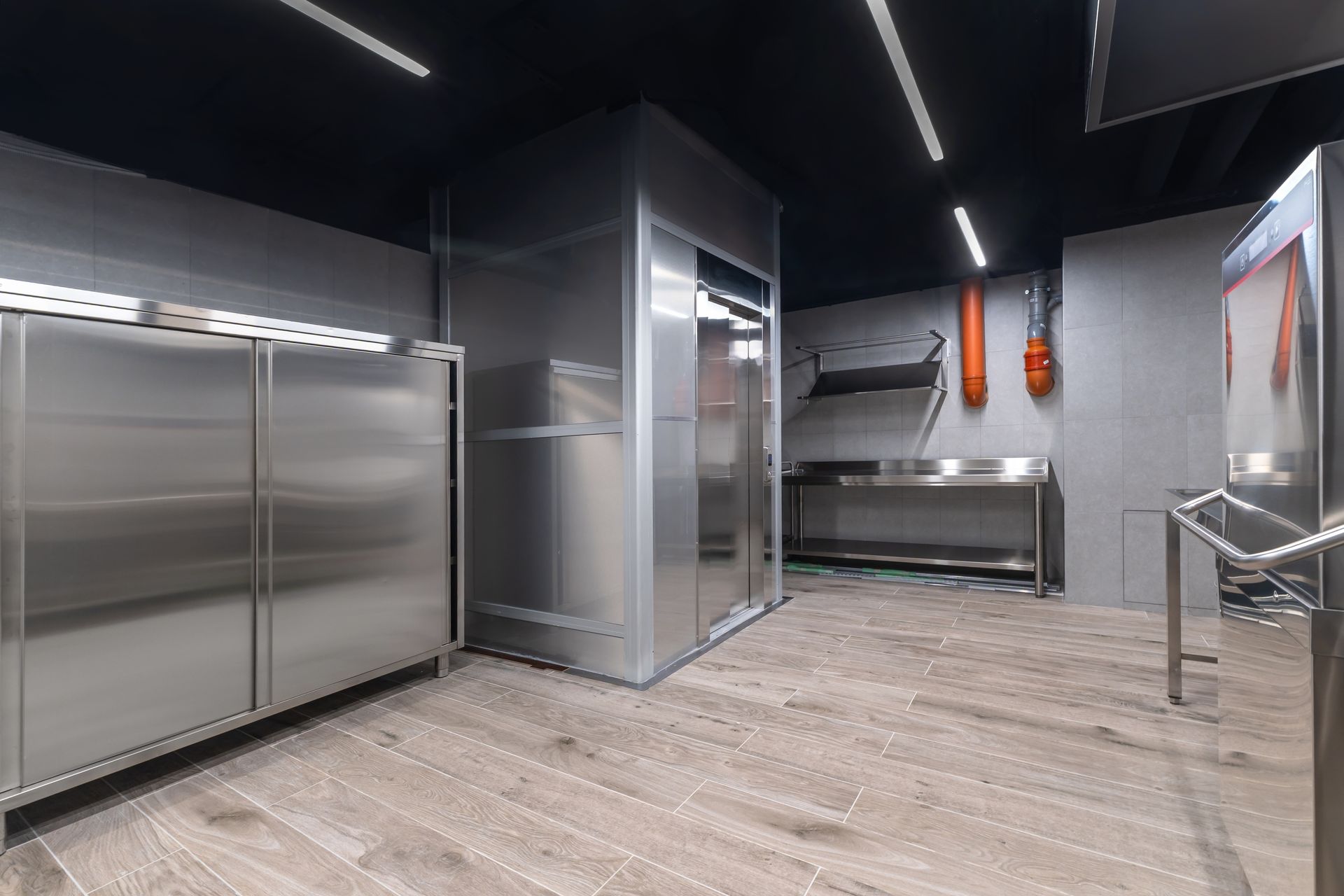
Floors Built for Sanitation Procedures
Commercial Kitchens & Food Prep Floors in Calhoun for restaurants and food facilities where grease, moisture, and hot water washdowns destroy standard flooring
Commercial kitchens and food production facilities in Calhoun experience flooring breakdown when hot water washdowns, grease accumulation, and sanitation chemical exposure penetrate surfaces not engineered for wet environments. Quartz and polyurethane mortar systems installed by Bayou Luxe Epoxy Solutions provide slip-resistant textures and seamless surfaces designed for restaurants, cafeterias, institutional kitchens, and food production areas where moisture control and contamination prevention determine operational compliance. Operators notice floors that drain properly, resist bacterial colonization in surface joints, and maintain traction even when wet conditions make unprotected concrete dangerously slippery.
Installation involves substrate moisture testing, profile preparation to ensure mechanical bond strength, and application of polyurethane mortar or quartz broadcast systems that create textured, slip-resistant surfaces capable of withstanding thermal shock from hot water, chemical exposure from sanitizers, and the constant moisture present in commercial food environments. The seamless finish eliminates grout lines and seams where food particles and bacteria accumulate.
Schedule a consultation to review sanitation requirements and performance specifications for your kitchen or food preparation facility.
What Changes After Installation Completes
Polyurethane mortar systems cure into thick, reinforced surfaces that combine resin binders with graded aggregates to create floors that absorb impacts from dropped pots, pans, and kitchen equipment without cracking or chipping. The broadcast quartz or decorative aggregate creates surface texture at a microscopic level, which maintains traction even when grease films or water cover the floor during food prep and cleaning procedures.
After the system is in place, kitchen staff work on floors where standing water does not pool in low spots, spilled oils and fats wipe away without staining, and the surface tolerates repeated hot water washdowns at temperatures that would cause standard epoxy coatings to soften or delaminate. The seamless installation means daily cleaning removes all visible debris, and there are no joints or seams where organic material hides between sanitation cycles, which directly affects health inspection outcomes and contamination risk.
These systems suit high-volume restaurant kitchens, institutional cafeterias, food processing areas, and any environment where USDA or health department standards require floors that support rigorous sanitation protocols rather than just cosmetic appearance.
Common Questions About This Service
Restaurant owners and facility managers typically want to understand how specialized kitchen flooring performs under health department scrutiny and daily operational stress.
Why do commercial kitchens require different flooring than other commercial spaces?
Food preparation environments combine standing moisture, thermal shock from hot equipment and washdowns, grease exposure, and sanitation chemical contact in ways that break down standard industrial coatings not formulated for simultaneous wet conditions and high temperatures.
What makes a floor slip-resistant when grease and water are present?
Broadcast aggregate systems embed angular particles into the resin surface, creating thousands of tiny contact points that maintain friction even when liquids reduce traction, whereas smooth coatings become dangerously slippery the moment moisture or grease films develop during food prep activities.
How does seamless flooring affect health inspection results in Calhoun?
Health inspectors look for sanitary surfaces without cracks, joints, or seams where food debris and bacterial contamination can hide between cleaning cycles, and seamless installations eliminate those accumulation points that cause violations and require costly remediation.
What happens during hot water washdown that damages regular epoxy floors?
Water temperatures above 140 degrees soften the molecular structure of standard epoxy resins, causing surface blistering, adhesion loss, and eventual delamination, which is why commercial kitchens need polyurethane or specialized high-temperature resin systems.
How long does a properly installed kitchen floor system last under daily use?
System longevity depends on substrate preparation quality, resin type, aggregate reinforcement, and operational conditions, but properly specified polyurethane mortar floors routinely perform for years in high-volume kitchens that would destroy tile, vinyl, or standard coating systems within months.
Bayou Luxe Epoxy Solutions works with restaurant operators, institutional kitchen managers, and food production facilities throughout North and Central Louisiana to select flooring systems that meet sanitation standards and operational demands. Arrange a site evaluation to discuss performance requirements and health code compliance for your food service environment.