
Surfaces Designed for Forklift Traffic
Commercial & Industrial Epoxy Flooring in Calhoun for warehouses and manufacturing facilities where heavy equipment and operational wear damage standard flooring
Warehouses and production facilities across Calhoun experience flooring failure when concrete surfaces break down under forklift traffic, chemical exposure, and the constant abrasion of daily operations. Bayou Luxe Epoxy Solutions installs high-build flooring systems engineered for commercial buildings, automotive shops, storage areas, and service bays where impacts, spills, and equipment movement exceed what residential coatings can handle. Facility managers notice seamless surfaces that simplify cleaning routines, resist operational staining, and maintain structural integrity through years of demanding use.
The service involves substrate evaluation to identify load requirements and chemical exposure risks, followed by installation of epoxy or polyaspartic systems selected based on facility performance goals, with thickness and aggregate reinforcement adjusted to match traffic patterns and operational demands specific to each space.
Request a site assessment to evaluate substrate conditions and establish flooring specifications for your facility.
How Industrial Systems Address Operational Demands
Industrial flooring systems use high-build resin applications that create thicker protective layers than residential coatings, with silica or quartz aggregates broadcast into the resin to increase impact resistance and abrasion tolerance. The system selection depends on whether the floor will encounter forklift point loading, chemical drips from production equipment, thermal shock from temperature changes, or the constant scuffing that occurs in high-traffic aisles.
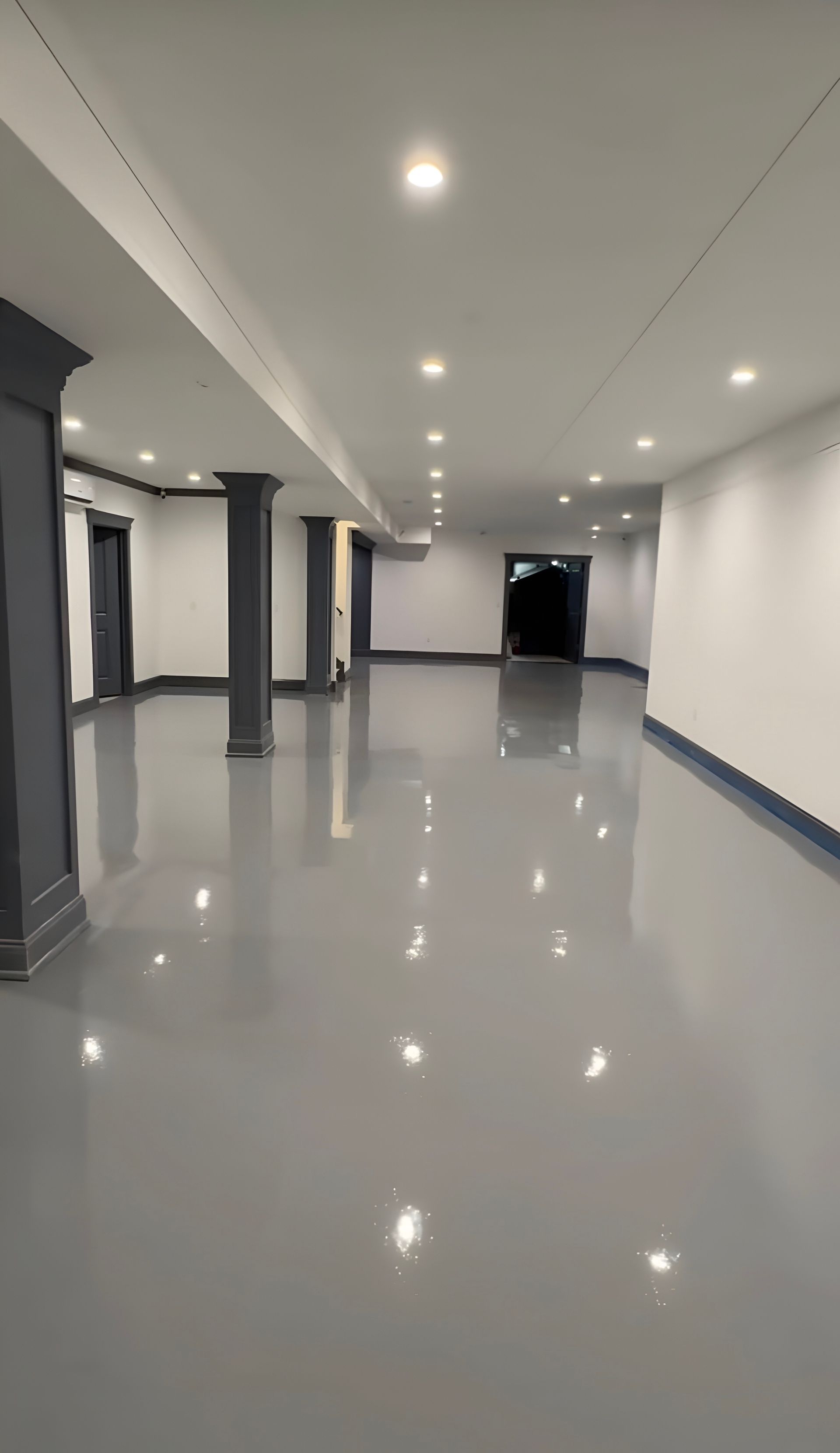
Once the system cures, production areas, storage zones, and service bays show floors where tire marks from pallet jacks wipe clean, hydraulic fluid spills do not penetrate the surface, and the seamless finish eliminates joints where dirt and contaminants accumulate during routine operations. The floor handles repeated impacts from dropped materials, resists chipping at edges and transitions, and maintains a uniform appearance that improves facility lighting reflection and workplace safety visibility.
System durability depends on proper surface preparation and resin thickness, not just product selection, which means facilities should evaluate both the coating chemistry and the installation process when comparing flooring proposals.
Answers to Frequent Service Questions
Facility managers often ask how commercial flooring systems perform under specific operational conditions and what factors affect long-term durability.
What distinguishes a commercial flooring system from a residential garage coating?
Commercial systems use higher resin solids content, increased film thickness, and often incorporate aggregate reinforcement to handle point loads from forklift wheels, pallet jack traffic, and impacts that would crack or delaminate thinner residential coatings designed only for passenger vehicle use.
How does the flooring resist chemical exposure from production operations?
The resin chemistry and aggregate reinforcement create a barrier that prevents petroleum products, solvents, and cleaning chemicals from penetrating to the concrete substrate, though resistance varies by specific chemical type and contact duration, which is why system selection should match actual exposure risks.
When should facilities schedule flooring installation to minimize operational disruption?
Installation timing in Calhoun should account for Louisiana humidity levels that affect cure rates, along with facility production schedules that determine when floor areas can be isolated, cleaned, prepared, and kept clear during the application and cure window.
What substrate conditions prevent successful coating installation?
Active moisture vapor transmission, existing delaminated coatings, oil-saturated concrete, and structural cracks that continue to move all require remediation before coating application, since these conditions prevent proper adhesion and lead to premature system failure regardless of product quality.
How do seamless floors improve facility maintenance compared to tile or other modular flooring?
Seamless installations eliminate grout lines and seams where spills penetrate, dirt accumulates, and bacteria colonize, which reduces cleaning time and allows simple damp mopping or auto-scrubbing to maintain sanitary conditions across the entire floor area.
Bayou Luxe Epoxy Solutions evaluates facility requirements including traffic patterns, load specifications, and chemical exposure to recommend appropriate system types and installation timelines. Contact our team to arrange a specification review for your warehouse, production space, or commercial building.